How Xpert Helped Celio Drive Store Footfalls by Targeting Verified Buyers
Background
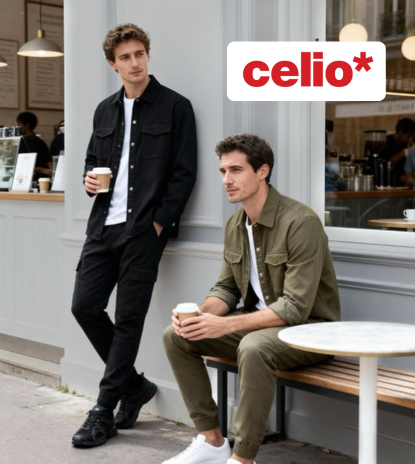
Celio is a globally recognised menswear brand founded in France in 1978, with a presence in over 60 countries. In India, Celio has established itself as a leading name in smart-casual men’s fashion, operating over 75 exclusive stores across 34 cities and more than 700 points of sale in 200 cities nationwide. The brand caters primarily to men aged 24 to 28, offering contemporary, high-quality clothing at accessible price points. With India being its fastest-growing market globally, Celio has been investing heavily in expanding its retail footprint through large-format flagship stores in key urban corridors. As part of this expansion, driving consistent in-store traffic to both new and existing outlets became a critical priority for the brand’s marketing team.
Challenge Faced
Despite strong brand recognition and a growing store network, Celio was struggling to convert its digital advertising spend into actual store visits. The brand’s campaigns relied heavily on broad city-level targeting and demographic filters, which generated high impression volumes but failed to reach consumers who were genuinely likely to walk into a store and purchase. Much of the ad spend was being consumed by audiences who lived far from store locations or had no demonstrated interest in the category. The core challenge was clear: Celio needed a way to identify and target real, high-intent buyers concentrated around each store’s catchment area, rather than broadcasting to an entire city and hoping for conversions.
Audience Strategy Undertaken
Xpert deployed its transaction-based buyer intelligence platform to map the concentration of actual apparel and fashion buyers living within Celio’s store catchment areas. By analysing verified purchase data from hundreds of brands, Xpert identified the specific pincodes, localities, and residential clusters where high-value menswear buyers were concentrated around each Celio outlet. Instead of broad demographic or interest-based targeting, Xpert built hyperlocal audience segments of consumers who had demonstrated real buying behaviour in adjacent categories. Celio’s digital campaigns were then restructured to serve ads specifically to these verified buyer clusters, ensuring that every impression reached someone with a proven propensity to purchase and a physical proximity to the store.
Results Achieved
The impact of Xpert’s hyperlocal buyer targeting was felt almost immediately. Celio saw a significant uplift in ad-driven inquiries, as the campaigns were now reaching consumers who not only matched the brand’s buyer profile but also lived within accessible distance of its stores. This increase in qualified inquiries translated directly into higher store footfalls, with store managers reporting a noticeable rise in walk-in traffic attributed to the digital campaigns. The cost per qualified inquiry dropped substantially compared to previous city-wide campaigns, and the overall return on ad spend improved as wastage was eliminated. Celio was able to validate that targeting verified buyers in specific catchment zones produced far stronger conversion outcomes than broad audience campaigns.
Inferences & Insights
This campaign reinforces a fundamental insight about retail marketing: the gap between impressions and store visits is bridged not by reach, but by relevance. For fashion and apparel brands operating brick-and-mortar stores, the ability to identify where real buyers live — at a pincode and locality level — is increasingly the difference between efficient spend and wasted budgets. Celio’s experience demonstrates that when digital ads are served to consumers with verified purchase behaviour in a store’s immediate vicinity, the path from ad exposure to in-store visit becomes significantly shorter. As retail brands across India expand their physical presence, those who invest in buyer intelligence to target catchment-level demand will consistently outperform those relying on broad demographic or city-level campaigns.
Xpert’s buyer intelligence enabled Celio to move beyond broad city-level advertising and reach real buyers living around their stores, resulting in a measurable increase in inquiries and in-store visits.
Want results like this for your brand?
Schedule a Demo